Fenerbahçe 2-0 Sturm Graz: Champions League Recap
Fenerbahçe beat Sturm Graz 2-0 in Istanbul. Here is what the result says about pre-match model signals, tactical risk and the return leg.
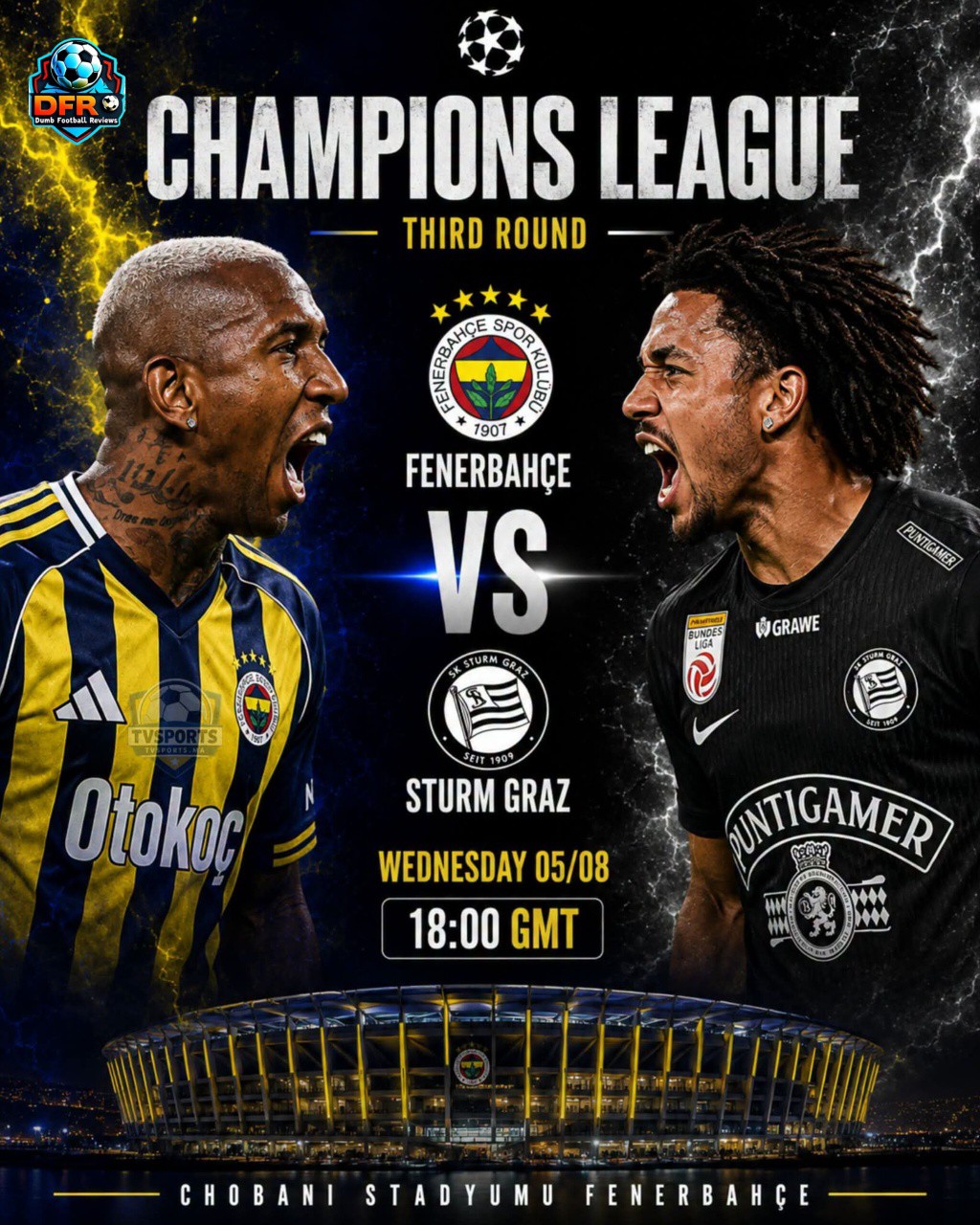
Fenerbahçe beat Sturm Graz 2-0 in Istanbul in the first leg of their Champions League third qualifying-round tie, turning a cautiously balanced pre-match analysis into a clear home advantage. The result gives İsmail Kartal’s side a two-goal margin before the return in Graz on 11 August, while Sturm now face a very different tactical problem from the one they brought to Turkey.
Fenerbahçe Match Recap
The scoreline is significant because the pre-match data pointed in two directions. Fenerbahçe had the stronger home context and entered the tie after progressing past Górnik Zabrze 2-1 on aggregate, winning 1-0 in Istanbul before drawing 1-1 in Poland. Sturm Graz, however, arrived with the cleaner recent record: a 6-0 aggregate victory over Hearts, including a 4-0 home win and a 2-0 success in Edinburgh, plus a 3-0 cup victory over SV Seekirchen.
That contrast made a controlled first leg the logical expectation. Instead, Fenerbahçe’s 2-0 win rewarded the side better equipped to combine territorial pressure with defensive caution. Without a published event log identifying the scorers and exact goal times, the most reliable conclusion is structural rather than individual: Fenerbahçe created enough separation on the scoreboard without allowing Sturm’s strong transition profile to dictate the tie.
Sturm Graz’s Tactical Risk
Sturm’s recent clean-sheet run suggested a compact plan in Istanbul. Fabio Ingolitsch’s team had shown against Hearts that it could defend patiently, stay narrow and attack quickly once space appeared. That approach was sensible against a Fenerbahçe side with greater attacking resources, but the 2-0 deficit changes the risk calculation for the return leg.
Sturm cannot simply repeat the low-event approach that worked across the Hearts tie. A two-goal deficit requires more possession, more advanced full-backs and earlier support around the forwards. Each adjustment can create the transition spaces Fenerbahçe were expected to target in the first place. For future prediction models, this is the key point: the second leg should not be treated as a replay of the first. The game state now encourages Sturm to become more open, even if its recent results were built on defensive control.
What Models Should Reweight
The pre-match signals correctly identified Sturm as a credible opponent, but the result shows why form must be separated from opponent strength and venue. Sturm’s 6-0 aggregate win over Hearts was impressive, yet Fenerbahçe represented a different test in Istanbul, where the home side’s crowd, technical quality and tie-management incentives carried greater weight.
A useful ScorePoint AI-style analysis should now reweight four variables before the return:
- Aggregate state: Fenerbahçe lead 2-0, so Sturm must take greater attacking risks.
- Venue split: the first leg was at Chobani Stadyumu in Istanbul; the return is at Stadion Graz-Liebenau, also known as Merkur Arena.
- Transition exposure: Sturm’s quick attacks remain dangerous, but pushing numbers forward may leave larger spaces behind.
- Availability: João Pedro was listed out with a knee injury and N. Sangaré with an ACL knee-ligament injury for Fenerbahçe, while Sturm’s published injury report listed no absences.
Those inputs matter more than simply counting each club’s latest wins. The best future predictions will distinguish between a team protecting a lead and a team forced to chase it.
Return-Leg Outlook
Fenerbahçe’s 2-0 victory puts Kartal’s side in control, but not beyond scrutiny. The Turkish club must avoid turning the return into an unnecessarily open contest, particularly against a Sturm team that scored six times across its previous Champions League qualifying tie. A compact midfield and selective counter-attacking plan would preserve the advantage.
For Sturm, the practical route is to score early without abandoning defensive balance. An opening goal would change the pressure on Fenerbahçe, but another concession would make the tie extremely difficult. This Champions League recap therefore points to a clear model lesson: the first-leg result has not merely improved Fenerbahçe’s qualification probability; it has also altered the tactical identity both teams need to use next.
Research references
These sources were checked while preparing this ScorePoint AI analysis.