Real Madrid Mourinho Return Shakes Up Transfer Market
José Mourinho’s Real Madrid return could reshape Madrid’s summer, from Julián Álvarez to Riccardo Calafiori and Mateus Fernandes.
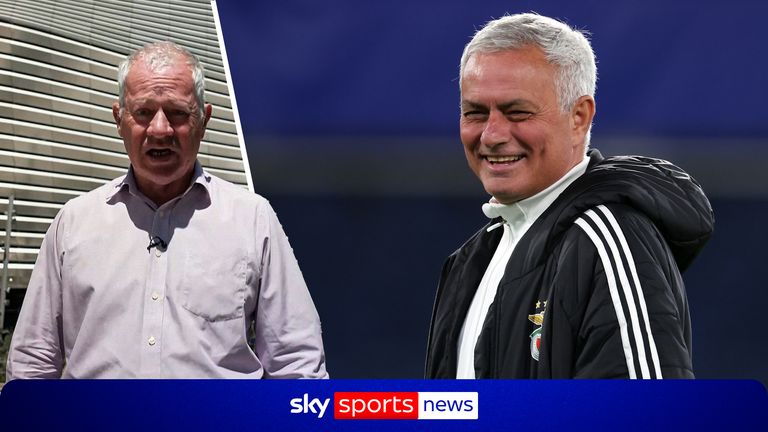
José Mourinho’s return to Real Madrid has been confirmed on a three-year deal, and the football consequences stretch far beyond the Bernabéu dugout. After Álvaro Arbeloa’s departure was finalised and Florentino Pérez secured a fresh mandate through 2030, Madrid have moved quickly to restore a manager who already knows the club’s internal rhythms, its pressure, and its obsession with trophies. This is not just a coaching change; it is a transfer-market signal that Real Madrid intend to rework the squad around Mourinho’s demands after two straight trophyless years and a 2025/26 campaign that ended with second place in La Liga on 86 points, eight behind Barcelona’s 94.
Mourinho Back at Madrid
Mourinho’s second spell is loaded with both nostalgia and immediate expectation. In his first tenure from 2010 to 2013, he delivered a La Liga title, a Copa del Rey and a Spanish Super Cup, and Madrid are clearly betting that his authority can sharpen a squad that finished second in the league and exited the Champions League at the quarter-final stage after a 4-6 aggregate defeat to Bayern. He is also expected to bring five members of staff, a detail that matters because Mourinho’s transfer planning usually extends to the training ground and the dressing room, not just the recruitment department.
The timing is important. Madrid had expected Mourinho to start work two weeks earlier after the final La Liga match against Athletic Bilbao, but the presidential election delayed the formal switch until Pérez’s victory was settled. Once that was in place, the club moved decisively, ending Arbeloa’s tenure and opening the door for a full reset under a coach whose career has taken him through Porto, Chelsea, Inter, Manchester United, Tottenham and Roma.
Transfer Market Pressure
The biggest implication of Mourinho’s return is that Real Madrid’s summer targets will now reflect a manager who prefers structure, competitive edge and immediate readiness. One of the first names to emerge is Julián Álvarez, with Atlético Madrid rejecting a €150 million approach and pointing to a release clause reported at €500 million. Even if that specific deal remains a long shot, the fact Madrid pushed so hard immediately after Pérez’s re-election shows the club is willing to attack the market aggressively under the new regime.
There has also been a Madrid hierarchy meeting involving José Ángel Sánchez, chief scout Juni Calafat and Jorge Mendes, where priority targets were discussed for Mourinho’s ecosystem. That detail matters because it suggests the club is aligning recruitment with a manager who wants clear profiles rather than broad squad depth. Madrid are not simply shopping for stars; they are looking for players who can fit a more demanding tactical identity from day one.
For context on how quickly the club is changing direction, a recent analysis of Mourinho’s tactical questions already highlighted how his return could alter Madrid’s midfield spacing, defensive line height and out-of-possession discipline. That shift will inevitably influence who Madrid pursue and who becomes expendable.
Defensive Targets Emerge
One of the clearest names linked with the new project is Arsenal and Italy defender Riccardo Calafiori, 24, who previously played under Mourinho at Roma. That connection is significant. Mourinho has always valued defenders who are comfortable under pressure, decisive in duels and versatile enough to adapt between a back four and a more conservative back five when required. Calafiori fits that profile more naturally than a pure stop-gap signing, and his age makes him a long-term asset rather than a short-term fix.
The interest in Calafiori also tells us something about the kind of market Madrid may pursue. Rather than recruiting purely on reputation, Mourinho appears likely to prioritise players he has coached before or players whose mentality can be trusted in big matches. If Madrid do make a serious move for the Italian, it would be another example of the club blending elite scouting with manager familiarity.
Madrid’s wider defensive thinking is already becoming visible in the market. A club this size can always attract elite centre-backs, but under Mourinho the emphasis is likely to move toward defenders who can survive pressure in knockout football, especially after the Champions League quarter-final exit to Bayern and a season that ended without silverware.
That kind of squad reshaping has echoes of other recent high-profile transfer storylines, including the way PSG’s pursuit of Michael Olise gathered pace around a clear tactical need. Our analysis of PSG’s Michael Olise move showed how elite clubs increasingly recruit to match a manager’s exact game model — a template Madrid may now follow even more closely.
Mourinho’s Portuguese Link
Another player heavily associated with the new era is West Ham midfielder Mateus Fernandes, 21, who is also a target for Chelsea. Reports around Madrid’s interest are logical when viewed through Mourinho’s career pattern: he has repeatedly trusted Portuguese players, players shaped by demanding systems, and footballers who can handle the emotional weight of major clubs. Fernandes would offer energy, pressing and technical security in midfield, all traits that could matter more in a team being rebuilt for consistency rather than just moments of brilliance.
The nationality link is worth noting too. Mourinho’s appointment at Real Madrid often brings stronger Portuguese influence into the recruitment conversation, whether through agents, scouts or simply the type of player he trusts. That does not guarantee a Fernandes move, but it raises the probability that Madrid will target versatile, hard-running midfielders rather than luxury signings only capable of performing in possession-heavy games.
In a squad that already contains top-end quality, the challenge is not adding more names; it is improving control. Mourinho’s Real Madrid, even in 2026, is likely to value balance and intensity over pure stylistic flair. That is why a 21-year-old with room to grow could become more attractive than an older, established star.
Rival Clubs React
Madrid’s return to Mourinho also ripples across Europe because rival clubs know his track record in negotiations. Atlético Madrid’s immediate rejection of the Julián Álvarez offer shows how seriously they view the threat. Meanwhile, Atlético are also hoping to persuade Bernardo Silva, 31, to join them instead of Barcelona or Real Madrid because they believe they can offer more game time. That is a fascinating sub-plot: Mourinho’s presence may make Madrid more attractive to elite players, but it can also intensify competition for a limited pool of proven winners.
The broader market will now react to the fact that Madrid are once again in “winner-now” mode. Benfica have already moved on by appointing Marco Silva, while Madrid have stepped into the opening with an experienced coach who has historically shaped transfer windows through urgency. Expect rivals to brace for approaches that are more targeted and, at times, more disruptive.
For readers following the wider transfer cycle, the same market logic that drives Madrid’s hunt for a defender or midfielder also appears in other European stories. Our analysis of Inter Milan’s Curtis Jones bid is a reminder that elite clubs increasingly price players according to tactical fit as much as raw reputation.
What Mourinho Changes
In practical terms, Mourinho’s return changes three things for Real Madrid. First, recruitment becomes more manager-led, with priority given to players who can handle direct tactical instruction. Second, the club’s spending ceiling may rise if the board decides the current squad is one or two elite signings short of competing for the league and Champions League again. Third, the mood around the dressing room changes immediately: Mourinho creates accountability, and that can affect which players stay, which players leave, and which positions become urgent.
- Arbeloa’s exit has already cleared the way for a new structure.
- Calafiori offers a Mourinho link and defensive flexibility.
- Mateus Fernandes fits the kind of midfield profile Madrid may prioritise.
- Julián Álvarez shows Madrid are still willing to chase elite statement signings.
That combination makes the Real Madrid Mourinho transfer story one of the defining narratives of the summer. The club finished the 2025/26 season with 86 league points, seven fewer than Barcelona’s 94, and the Champions League quarter-final defeat to Bayern underlined the scale of the rebuild. Mourinho is arriving to win quickly, and that urgency will shape every move Madrid make from now until the window closes.
For fans tracking how the next phase could unfold, ScorePoint AI can help turn this kind of transfer news into actionable insight. Explore our AI predictions for forward-looking match and market analysis, or use the AI assistant to dig into squad fits, tactical roles and likely transfer outcomes.
Outlook
Real Madrid’s Mourinho return is more than a headline; it is a statement of intent. With Pérez secure until 2030, Arbeloa gone, and the club already linked to players such as Calafiori, Mateus Fernandes and Julián Álvarez, the transfer market is about to be shaped by a manager who rarely waits for problems to solve themselves. If Madrid wanted a calm summer, they hired the wrong man — but if they wanted a summer that could restore order and trophies, Mourinho is exactly the profile they would choose.