Brighton 3-0 Arsenal: Premier League Upset Analysis
Brighton stunned Arsenal 3-0 at the Amex. Here is how pre-match signals, tactical risk and key data explain the Premier League upset.
Brighton & Hove Albion beat Arsenal 3-0 at the Amex Stadium on September 19, ending the visitors’ perfect Premier League start and moving Fabian Hurzeler’s side into third place, just two points behind the champions. Pascal Gross, Charalampos Kostoulas and Chema Andrés scored the goals in a result that was more than a surprise on the scoreboard. It exposed a clear tactical mismatch: Brighton were prepared to attack Arsenal’s buildup and compete for every first and second ball, while Mikel Arteta’s side never established control.
Brighton 3-0 Arsenal Explained
The pre-match model signal was not simply “Arsenal are unbeaten, therefore Arsenal are safe.” Arsenal arrived with a 100% league record and a chance to match a 123-year-old club record of eight consecutive wins, but Brighton carried several risk indicators of their own. Home advantage, an aggressive pressing structure and the confidence of a midweek Carabao Cup comeback at Manchester United all pointed to a difficult matchup.
For prediction analysis, the important distinction is between form strength and game-state vulnerability. Arsenal’s results suggested a high floor, but Brighton’s approach threatened the exact areas required to build that floor: secure possession under pressure, win duels and progress cleanly from the defensive half. The public pre-match data available here does not include a precise probability forecast, so the sensible conclusion is not that the upset was inevitable. It is that Brighton presented a meaningful tactical risk that a results-only model could undervalue.
Gross and Kostoulas Punish Errors
Brighton’s opening goal arrived after 31 minutes. Gabriel and Riccardo Calafiori gave Gross too much room around 20 yards from goal, and the midfielder’s strike flew in off David Raya’s near post. Raya had already made an early fingertip save from Kostoulas after Bruno Guimaraes lost possession in the seventh minute, but Arsenal did not correct the underlying problem.
The second goal illustrated the same weakness in a more damaging transition. Arsenal failed to turn a promising counterattack into a shot when Bukayo Saka could not make meaningful contact. Brighton immediately moved upfield, Calafiori was caught out of position and Kostoulas was allowed time to set himself before driving a low effort into the corner from 22 yards.
Andrés made it 3-0 in the 57th minute, rising unmarked from a corner. Set pieces had already become a pressure point by then, and the goal removed any realistic route back for Arsenal. Brighton’s three goals came from three different phases: a permitted long-range strike, a transition after Arsenal’s attacking failure and a poorly defended corner.
Arteta’s Tactical Warning
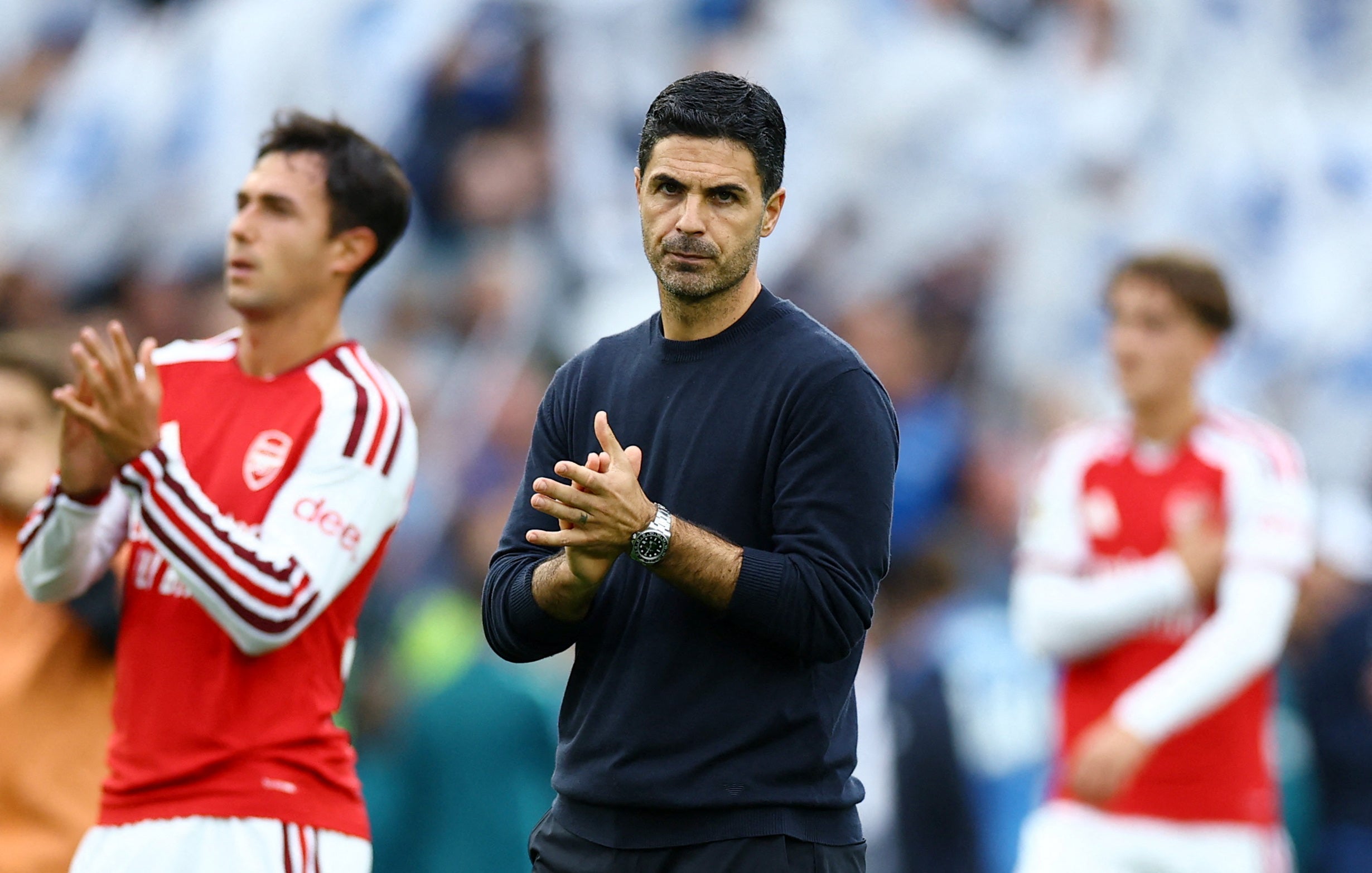
Arteta described the performance as “extremely disappointing” and said his team was far below the Premier League basics required to win the first duel and the second ball. He also highlighted the number of technical errors after Arsenal regained possession in their own half, particularly against Brighton’s man-to-man pressure.
That assessment matters for the next AI prediction cycle. Arsenal were not merely beaten by finishing variance. They were repeatedly forced into low-quality decisions. The midfield pairing of Declan Rice and Guimaraes is still evolving, Arteta said, and Brighton targeted that early-stage coordination by pressing aggressively and attacking the spaces created by turnovers.
Arsenal also had limited attacking influence from Saka, while the defensive line struggled to protect Raya. Brighton, by contrast, maintained intensity after halftime instead of retreating to protect a two-goal lead. That control explains why the 3-0 scoreline did not feel like a narrow upset; it reflected a match in which the underdog dictated the terms.
What the Model Should Watch Next
- Arsenal’s response to pressure: Future previews should test whether opponents can reproduce Brighton’s man-to-man approach rather than relying only on Arsenal’s unbeaten record.
- Midfield balance: Rice and Guimaraes must improve their spacing and circulation after turnovers, especially against teams that attack second balls.
- Brighton’s ceiling: Third place and only a two-point gap to Arsenal give Hurzeler’s team a stronger data profile than a one-off upset suggests.
- Set-piece concentration: Andrés’ unmarked header makes defensive restarts a specific variable to monitor in Arsenal’s next fixtures.
The practical lesson from this Premier League upset recap is straightforward: strong recent results should not erase matchup risk. Brighton 3-0 Arsenal was driven by pressure resistance, duel success and tactical aggression, not merely an isolated finishing streak. With a 21-day break before Arsenal’s next match, Arteta has time to address those weaknesses. For ScorePoint AI readers, the next useful analysis is whether Arsenal’s rebound restores the pre-match strength signal—or whether Brighton has revealed a repeatable blueprint for disrupting the champions.
Research references
These sources were checked while preparing this ScorePoint AI analysis.