Champions League 2026-27 Draw: Toughest Paths Ranked
A model-based analysis of the Champions League 2026-27 draw, measuring opponent quality, travel, home advantage, congestion and qualification risk.
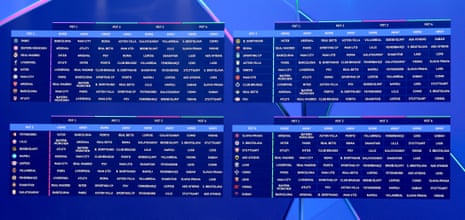
The Champions League 2026-27 league-phase draw has created a clear split between glamorous schedules and genuinely difficult ones. Manchester City face Paris Saint-Germain, Barcelona, Napoli, RB Leipzig and Porto, while Arsenal must navigate Real Madrid, Bayern Munich, Borussia Dortmund and Napoli. Yet the hardest route is not simply the one with the most famous badges. A useful draw analysis must also price away assignments, travel, fixture spacing, squad depth and the danger of falling into the ninth-to-24th-place play-off bracket.
How The Difficulty Model Works
For this preliminary ScorePoint-style model, each club receives a 100-point difficulty score. Opponent strength accounts for 50 points, home-versus-away allocation 15, travel burden 10, schedule congestion 15 and squad-depth protection 10. The model also tests two qualification margins: a strong campaign in which a team reaches the top eight, and a merely adequate campaign in which it finishes between ninth and 24th and must play a February tie.
The competition has 36 teams, with eight matches per club: four at home and four away. The top eight advance directly to the round of 16, while positions nine through 24 enter a two-legged knockout play-off. There is no Europa League safety net for teams finishing 25th or lower, making the lower half of the table materially more important than it was in the old group-stage format.
Manchester City Lead The Risk Table
Manchester City — difficulty index: 78/100. Enzo Maresca’s side drew both holders Paris Saint-Germain and Barcelona, plus Napoli at home, Porto, RB Leipzig, Sporting CP, AEK Athens and Lens. The home fixture against Napoli helps, but the high-end opposition load is unmatched among the leading contenders.
The schedule is particularly demanding because City face PSG on matchday two, Barcelona in the same league phase and Leipzig away on matchday four. Those matches sit inside a sequence running from September 8 to January 27, before the February play-offs begin. The presence of midfielders Rodri and Kevin De Bruyne gives City control and experience, but even strong depth can be tested when elite opponents arrive before the table separates.
Arsenal’s Elite Away Test
Arsenal — 76/100. The Premier League champions host Real Madrid, visit Bayern Munich, host Borussia Dortmund and travel to Napoli. That is a heavier top-end block than the headline draw initially suggests. Real Madrid at home is manageable by this model; Bayern away and Napoli away are the more damaging assignments because they combine opponent quality with hostile travel and reduced home advantage.
Arsenal also face Real Betis, Lille, Sabah and Slavia Praha. Those matches offer points, but the qualification-margin scenario is narrow: dropping points against two of the lower-rated opponents could turn a top-eight campaign into a play-off campaign, even if Mikel Arteta’s team performs credibly against the giants.
Liverpool And Villa Face Travel
Liverpool — 72/100. Andoni Iraola’s team has Inter Milan away and Atlético de Madrid at home, alongside Porto, Villarreal, Fenerbahçe, Club Brugge, Lens and LASK. The Fenerbahçe trip is the main travel penalty, while Inter and Villarreal provide a demanding technical test. Compared with City and Arsenal, Liverpool have fewer two-opponent clashes among the competition’s absolute favourites, which keeps the score below the top two.
Aston Villa — 70/100. Unai Emery’s Europa League winners visit Barcelona and host holders PSG. Borussia Dortmund, Fenerbahçe and Galatasaray add further quality, while Club Brugge, Viking and Slavia Praha are not automatic wins. Villa’s route is dangerous because the glamour games are separated by long-haul or awkward trips, and their margin for error is smaller than that of the established super-clubs.
United’s Misleading Draw
Manchester United — 68/100. Michael Carrick’s side host Bayern Munich and travel to Atlético de Madrid, then face Roma, Sporting CP, RB Leipzig, Villarreal, Sabah and Como. Bayern at home is a severe opening test, but four favourable-looking fixtures give United a clearer route to the top 24 than their headline opponents imply.
The model discounts the assumption that a Bayern fixture automatically makes this the hardest draw. United’s qualification margin will be decided by results against Sabah, Como, Villarreal and Sporting rather than by a single marquee night. That is where squad depth matters: rotation must preserve points in the accessible fixtures while the team manages a schedule that reaches eight league-phase matches by January 27.
Practical Qualification Outlook
The strongest model signal is that City and Arsenal face the greatest risk of losing top-eight status, not necessarily of missing the knockout phase altogether. Liverpool and Villa have difficult travel profiles but more recoverable middle sections. United’s path is less glamorous and potentially more efficient.
The qualifying field also contains genuine variance. LASK overturned a 3-0 deficit against Celtic with a 5-1 second-leg win, while Sabah came through all four qualifying rounds. Those results warn against treating Pot 4 opponents as schedule filler. The final Champions League preview should therefore update for confirmed kick-off order, domestic congestion and squad availability rather than relying on the draw’s reputation alone.
Research references
These sources were checked while preparing this ScorePoint AI analysis.