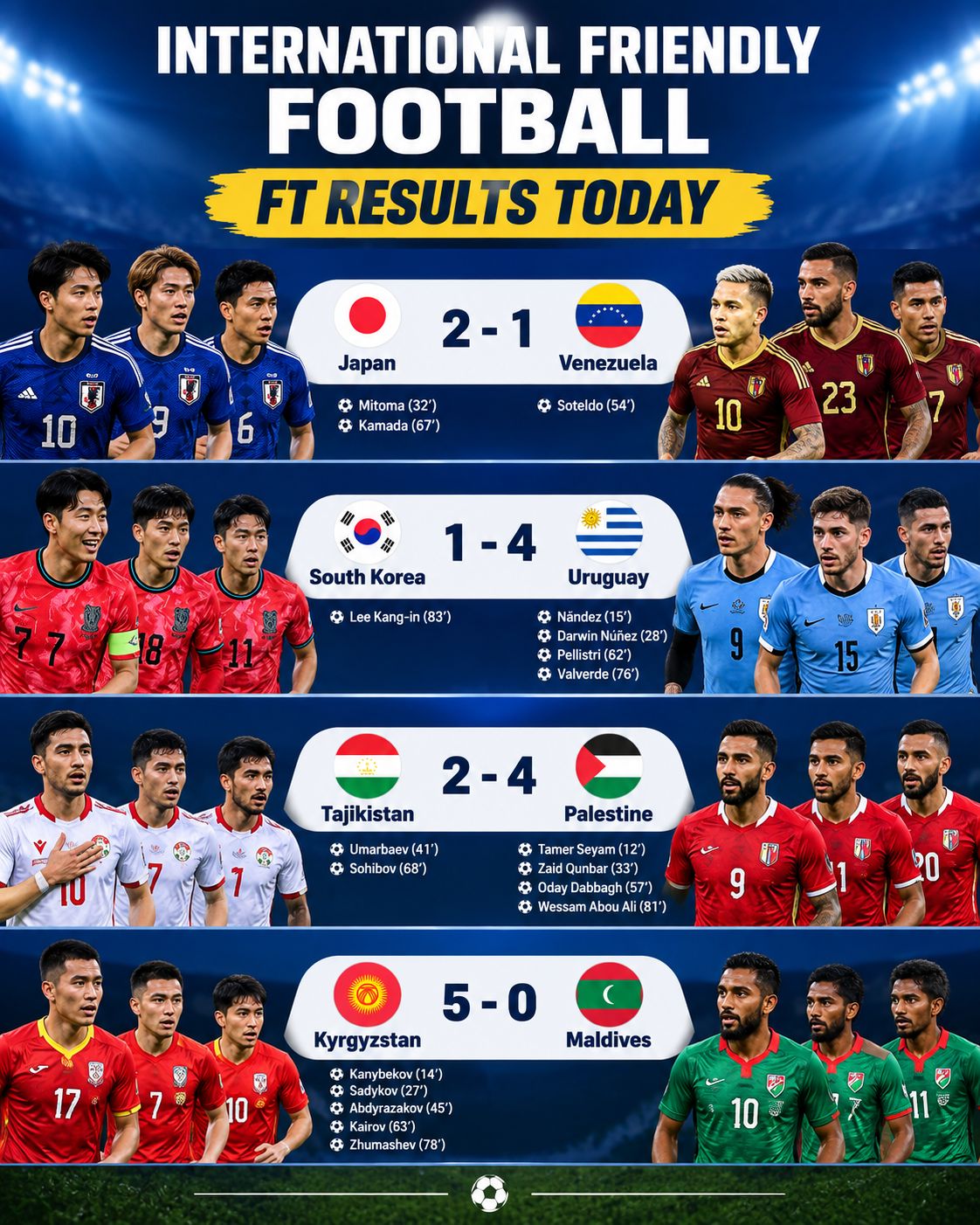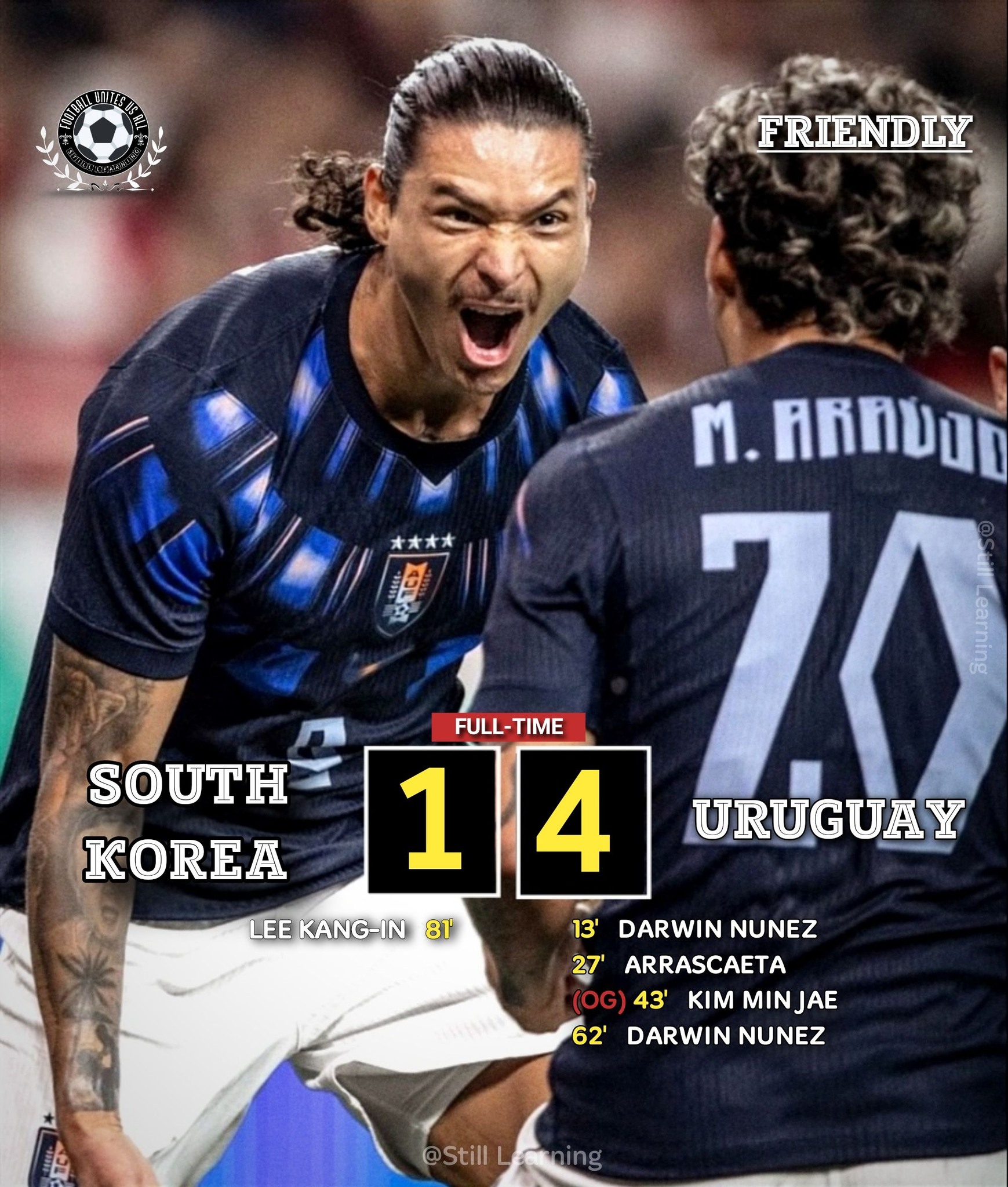
Korea Republic 1-4 Uruguay: Friendly Match Recap
Uruguay beat Korea Republic 4-1 in Seoul as Son Heung-min scored his 58th international goal. Tactical risk and model signals shape this friendly recap.
Uruguay defeated Korea Republic 4-1 at Seoul World Cup Stadium on September 28, despite Son Heung-min scoring his 58th international goal. The scoreline gave Marcelo Bielsa’s visitors a clear result, while Korea coach Robert Moreno said his side recognized tactical problems too late and would not insist on a 4-4-2 approach. For a model-led reading, the key lesson is not to treat the margin as proof of a predictable mismatch: the available pre-match information does not include a verified forecast, lineup data or chance statistics.
Korea Republic 1-4 Uruguay Recap
Son’s goal was a landmark contribution in a difficult night for Korea Republic, but it did not prevent a three-goal defeat. The result puts the contrast in plain terms: Korea found the net once, while Uruguay scored four. The match information available here does not establish the timing of the goals or provide a reliable breakdown of shots, possession or expected goals, so it would be misleading to invent a sequence or claim that one side dominated a particular statistical category.
Uruguay coach Diego Forlán described Korea as a world-class team and said his prepared plan fit the match. That comment offers a useful tactical clue without requiring assumptions about the exact shape or phases of play: Uruguay believed its preparation translated effectively on the pitch. In a friendly, that execution matters to the recap, but the 4-1 score alone cannot tell us whether the advantage came from chance volume, finishing, or specific defensive errors.
Moreno’s Tactical Risk
Moreno’s post-match response centered on the system. He apologized to Korean supporters and acknowledged that the tactical issues became clear too late, adding that Korea would not insist on playing 4-4-2. That is a more actionable signal than the final score by itself. If a team’s structure is being reconsidered after a heavy defeat, future predictions should account for possible changes in spacing and role assignments rather than assume the same setup carries forward unchanged.
Moreno also defended the players introduced in the second half, praising their performances despite the 1-4 loss. That distinction matters in evaluating squad depth: a poor team result does not automatically mean each substitute performed poorly. It also cautions against reading the score as a complete assessment of every player’s contribution. The available reporting does not name the substitutes or provide individual statistics, so a more detailed personnel verdict is not supported.
What the Model Should Learn
For AI predictions and free picks, the useful signal is the interaction between tactical stability and outcome—not a claim that a model foresaw this exact margin. No pre-match model probability or pick is provided in the public information available for this recap. Readers should therefore separate a correct direction, if one was forecast, from a precise score prediction; a 4-1 result is a strong outcome, but it does not validate an unsupported pre-match rationale.
- Track Korea’s shape: Moreno’s comments make the 4-4-2 decision a variable to reassess before Korea’s next match.
- Measure Uruguay beyond the score: look for verified shot and chance data before concluding that the four goals reflected repeatable attacking superiority.
- Account for personnel: Moreno’s praise for second-half entrants suggests that selection and role changes deserve attention, even after a defeat.
This is the kind of distinction a careful ScorePoint AI reader should make: update on the confirmed coaching comments and result, but avoid adding certainty where the underlying data is missing.
Practical Outlook After Seoul
Uruguay leave Seoul with a 4-1 friendly win and a coach who said the plan worked against a highly regarded opponent. Korea leave with Son’s 58th international goal, a heavy defeat and a clear tactical question from Moreno about continuing with 4-4-2. Before using this recap to shape a future prediction, wait for confirmed lineups and assess whether Korea changes its structure; for Uruguay, seek evidence that the approach can produce chances consistently, not just a favorable scoreline. Those are the practical signals to carry forward—not an assumption that either team will repeat this result.
Research references
These sources were checked while preparing this ScorePoint AI analysis.