Tajikistan 2-4 Palestine: International Friendly Recap
Tajikistan led twice but fell 2-4 to Palestine in a closed-door friendly. See the pre-match signals, decisive risks and what the China test may reveal.
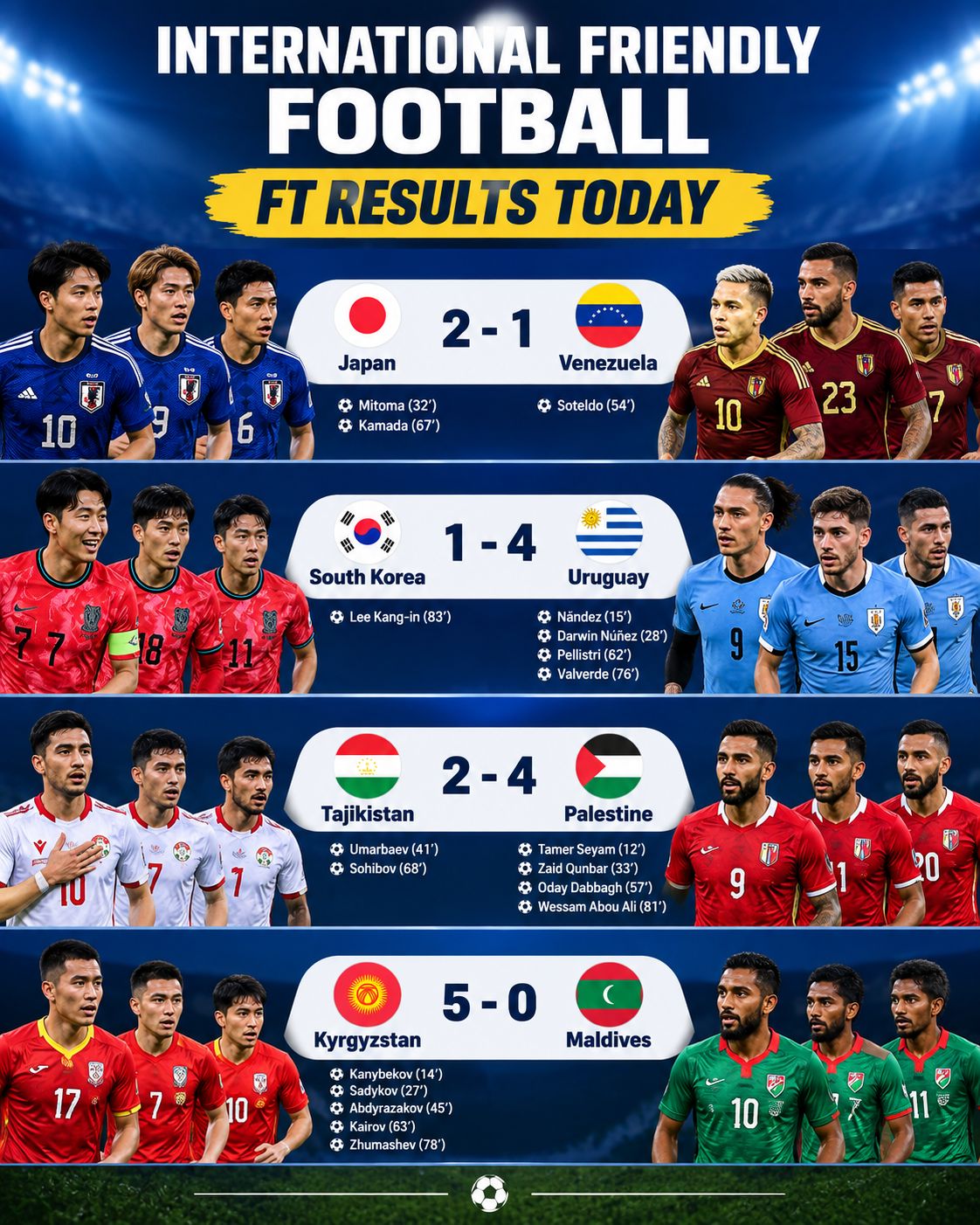
Tajikistan twice moved in front, but Palestine turned a six-goal friendly into a 4-2 win on September 28, 2026, at Tongliang Long Stadium. Sheriddin Boboev opened the scoring from the penalty spot, Nozim Babajanov put Tajikistan ahead again, and Assad Al-Hamlawi scored twice as Palestine took control of the outcome. Played behind closed doors at a neutral venue, the match offered a sharp reminder: recent form and a balanced pre-match forecast can miss the defensive risk when a game repeatedly changes state.
Tajikistan vs Palestine: The Scoreline
The reported scoring sequence began with Boboev’s penalty for 1-0. Al-Hamlawi levelled for Palestine, then Babajanov restored Tajikistan’s lead at 2-1. Palestine equalised again before going on to win 4-2; Al-Hamlawi finished with a brace. Public match records do not provide a complete, reliable minute-by-minute account of the later goals, so the clearest reading is the final pattern: Tajikistan scored twice, Palestine scored four times, and the hosts’ advantage did not hold.
That pattern matters more than treating the result as a simple upset. Tajikistan showed it could get in front twice, but a lead is not the same as control. In a friendly, the six-goal total is evidence of an open result, not proof of a particular tactical cause: detailed shot, possession and defensive-action data are not available in the public match information.
What the Pre-Match Signals Missed
The available pre-match form snapshot gave Tajikistan the stronger recent record: six wins in its previous 10, compared with two for Palestine. The same preview framed the fixture as balanced, noting that both teams often scored while describing their defences as solid. Its historical indicators put both-teams-to-score at 50% for each side, with clean sheets recorded at 40% for Tajikistan and 30% for Palestine.
The 2-4 result does not invalidate those longer-run signals. It does show why a model should separate a team’s general scoring and clean-sheet rates from the risk of an unusually volatile match. Six goals, two Tajikistan leads and Al-Hamlawi’s brace are match-specific evidence that the defensive side of the forecast deserves a fresh look. For ScorePoint AI readers, the useful lesson is not to overreact to one friendly, but to check whether future predictions account for game-state swings as well as recent wins.
Tactical Risk and the Limits
Tajikistan lined up in a 4-2-3-1, according to the available lineup record. That identifies the starting structure, but not how the shape changed after either lead or which spaces Palestine exploited. Without verified event data, it would be guesswork to attribute the four goals to a high line, a specific pressing trigger or individual defensive errors.
The result still flags a practical question for the next analysis: can Tajikistan protect an advantage when the opponent responds? The pre-match picture favoured Tajikistan on recent wins, while the final score exposed a gap between that form signal and the match’s defensive outcome. Palestine, meanwhile, demonstrated that its lower win count in the 10-game snapshot did not prevent it from producing four goals in this matchup. One result is a useful update, not enough evidence to rewrite either team’s baseline.
What to Watch Next
Tajikistan’s next listed test is an away match against China on October 6. That fixture should help distinguish a one-night friendly outlier from a repeat issue: the key indicators are whether Tajikistan can keep its defensive shape after scoring and whether its 4-2-3-1 remains balanced when the opponent presses back. Palestine’s four-goal return is an important result, but the limited public detail means it cannot yet be translated into a precise attacking pattern.
This Tajikistan 2-4 Palestine recap points to a measured model adjustment: retain the pre-match form context, but give more weight to defensive uncertainty than a clean-sheet trend alone might suggest. Readers assessing upcoming predictions and free picks should look for confirmed lineups and richer match data before deciding whether the six-goal friendly signals a lasting change. A related friendly recap on Australia and Brazil also explores how to read model signals against a single match result.
Research references
These sources were checked while preparing this ScorePoint AI analysis.