Petrocub 3-3 Borac Banja Luka: Conference League Recap
Petrocub and Borac Banja Luka shared six goals in a wild Conference League draw, with tactical risk and model signals shaping what comes next.
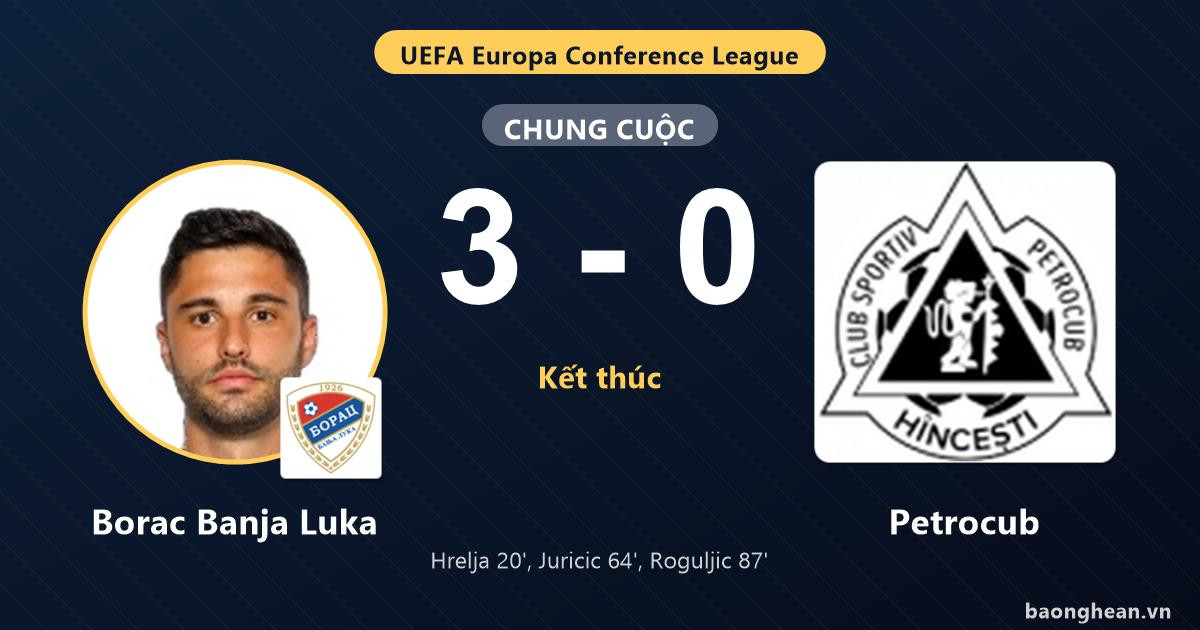
Petrocub and Borac Banja Luka delivered a six-goal Conference League recap that matched the competition’s qualifying chaos: a 3-3 draw that punished defensive hesitation and rewarded every moment of ambition. For ScorePoint AI readers, the key takeaway is not just the scoreline, but how the game aligned with pre-match model signals that pointed toward volatility, both teams scoring, and a narrow margin between control and collapse.
Petrocub vs Borac Banja Luka
The fixture opened with the kind of tempo that makes early-round European qualifiers so difficult to model cleanly. Petrocub, who entered the tie as a side with limited public pre-match data, leaned into home energy and high event volume. Borac Banja Luka, the more established European name in this matchup, did not settle into passive protection; they kept pushing forward and accepted the risk of a stretched match state. The result was a 3-3 draw in which neither side could sustain control for long enough to protect an advantage.
That profile matters for future Conference League recap work. When two sides trade attacks instead of compressing the game, models that prioritize goal expectancy and game-state swings tend to outperform simple form-based reads. This match was a reminder that early qualifying ties often become less about clean structure and more about how quickly teams react after conceding.
Risk Beat Structure
The most important tactical signal was the amount of risk both teams accepted. Borac Banja Luka were not content to sit on a lower-event away plan, while Petrocub showed enough urgency to turn the contest into a transitional match. In practical terms, that creates more finishing chances, but it also opens the door to defensive regression. A 3-3 scoreline usually means at least one side repeatedly failed to manage rest defense, second balls, or transition recovery.
For readers tracking the model lens, this is exactly the type of game where pre-match signals can be validated in the final score. The public data available for Petrocub was limited, which narrows the tactical certainty, but the outcome still fits a high-variance script: open phases, repeated momentum swings, and little evidence that either side could freeze the tempo once the match became stretched.
Borac Banja Luka Response
Borac Banja Luka’s role in the draw is especially relevant because the club has stronger recent European context than Petrocub. They were already listed among the Conference League qualification field alongside names such as Chelsea, Gent, Panathinaikos, and FC Noah in the broader competition map, which underlines the size of the gap between elite league-phase qualifiers and the clubs fighting through the early rounds. Borac’s willingness to attack away from home suggested confidence, but it also left them exposed to exactly the kind of swing that produced the 3-3 final.
From a recap perspective, this was not a case of one team “surviving” and the other collapsing. It was a shared tactical gamble. Borac Banja Luka got enough quality moments to score three, yet their defensive balance never fully matched the attacking output. That is the sort of mismatch the model watches closely in future rounds: when scoring travel is possible, but clean-sheet probability is fragile.
What the Model Saw
- High goal environment: six total goals confirmed an over-friendly match state rather than a cagey first-leg pattern.
- Both teams to score profile: Petrocub and Borac Banja Luka both found enough attacking rhythm to avoid a low-scoring read.
- Volatility over control: neither side held a decisive grip after scoring, which is a major predictor of late swings in future qualifying ties.
- Limited public baseline: when pre-match data is thin, the model leans harder on structural factors such as pace, risk tolerance, and transition exposure.
This is where the analysis value is strongest for ScorePoint AI readers: the draw does not just sit as a result, it becomes a case study in how qualifying ties can break away from conservative expectations. A 3-3 scoreline often tells us more about in-game decision-making than pre-match reputation.
Next Match Watchlist
The practical outlook is straightforward. Petrocub’s challenge is to prove that this level of openness was a one-off rather than a structural weakness. If they repeat the same defensive errors, future matches will continue to produce high-event scorelines. Borac Banja Luka, meanwhile, need to show they can keep their attacking threat while tightening the spaces behind the ball.
For future Conference League recap and analysis pieces, the most important watchpoint is whether either side can shift from chaos to game management. In qualifying football, that transition often decides who progresses and who gets trapped in another wild draw like Petrocub 3-3 Borac Banja Luka.
Europa League Qualifiers: What the Model Watches offers a useful parallel for how early-round European data can sharpen future reads.
Research references
These sources were checked while preparing this ScorePoint AI analysis.