PSG-Arsenal Aftermath: Summer Transfer Market Shockwaves
PSG’s final win over Arsenal is already reshaping the summer transfer market, with a €345 million Gunners rebuild and major moves across Europe.
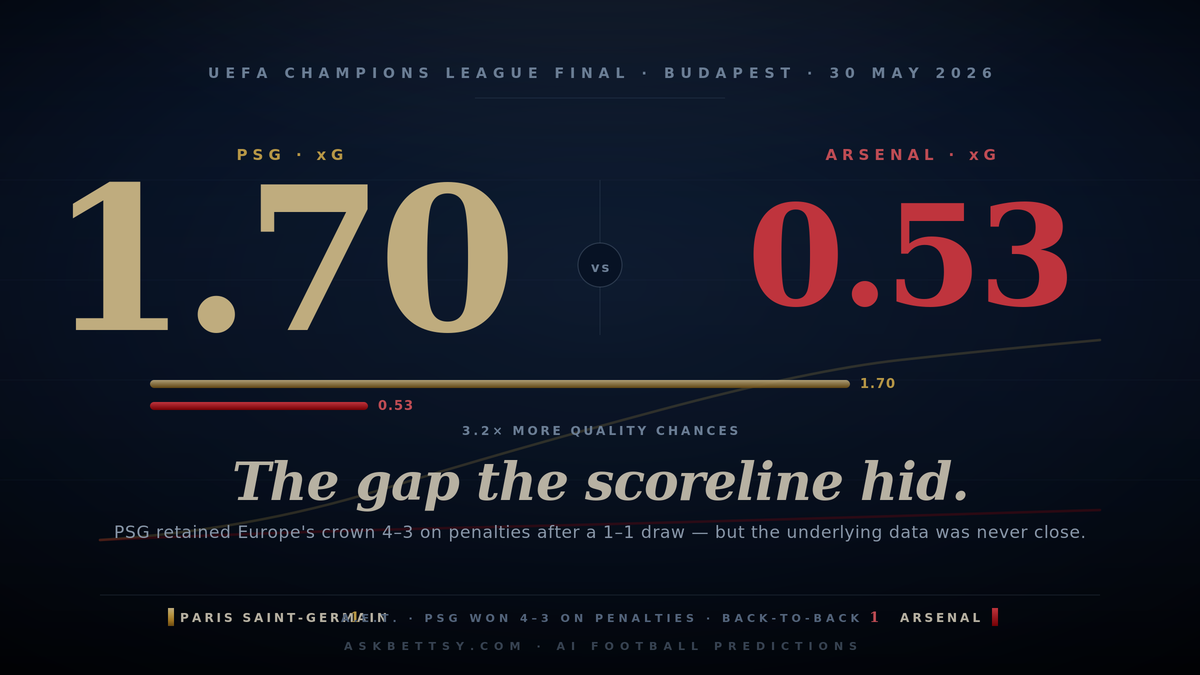
Paris Saint-Germain’s 1-1 draw and 4-3 penalty shootout win over Arsenal in the 2025/26 Champions League final did more than settle Europe’s biggest prize. It triggered a fast-moving summer transfer market reaction, with Arsenal’s board now preparing an ambitious rebuild after a second defeat in a Champions League final, and PSG already moving to strengthen from a position of power.
For Arsenal, the result lands painfully because it came at the end of a season that already looked historic: they won the Premier League for the first time since 2004 and finished top with 85 points. Instead of celebrating a domestic and European double, the club now has to turn the final disappointment into a transfer response, and the scale being discussed is striking. For PSG, the win reinforces a squad-building model that is still evolving under Luis Enrique, and it may help the club sell its project to new targets such as Yan Diomande.
Arsenal’s €345m rebuild
The clearest transfer-market consequence of the final is Arsenal’s planned spending. The club intends to go to approximately €345 million in total transfers, with €200 million already allocated for two priority signings: Morgan Rogers from Aston Villa and striker Eli Kroupi from Bournemouth. That is not a cosmetic response; it is a full-scale reset of the squad profile after falling just short in the biggest match of the season.
Arsenal’s recruitment list is also broader than two headline names. The club is targeting a second striker, a left winger, a number six, an eight, and a right back. That list tells its own story about the final: the Champions League defeat did not point to one isolated weakness, but to several structural gaps that can only be addressed with a multi-layered window.
The board is also prepared to approve a further €145 million for defenders and midfielders, but only if the club generates about €115 million in sales. That means the summer transfer market will not be driven by incoming ambition alone. Player exits will matter, and Arsenal may need to trade out depth to create room for the next step in their evolution.
For a club that reached only its second European Cup final in history and lost the first in 2006 to Barcelona, this is the kind of moment that often accelerates decisions. The PSG-Arsenal final aftermath has turned Arsenal’s transfer planning from gradual squad refinement into a high-pressure response window.
Final defeat, transfer urgency
The 1-1 scoreline and penalty loss amplify the sense that Arsenal were close, but not close enough. In tournament terms, they had already taken meaningful steps this season, and their run to the final included strong knockout work, but the final itself exposed the edge required at the very top. That is why the transfer market is now so important: the club does not need a rebuild from scratch, but it does need upgrades with immediate European-level impact.
Supporters will also notice that the strongest reported targets reflect the club’s tactical needs. A left winger and a second striker suggest Arsenal want more variety in the final third, while a number six and an eight imply a midfield that can better control transitions in high-level knockout matches. A right back also points to the need for added athleticism and defensive security on the flank against elite wide players like PSG’s.
If you want the broader tactical frame from the final itself, our earlier breakdown in Paris Saint-Germain vs Arsenal: Tactical Final Fallout looks at how the match was shaped in key phases. That context matters because the transfer response is not just about names, but about solving problems the final made impossible to ignore.
PSG’s winning advantage
PSG’s title win changes their transfer position in a different way. Luis Enrique’s side have now added a Champions League crown to a domestic dynasty built on five consecutive Ligue 1 titles, and that kind of success can influence the summer market in two directions at once: it can attract elite targets, and it can raise the value of existing players.
One immediate name in circulation is Yan Diomande. The 19-year-old Ivorian winger from RB Leipzig has been linked with PSG as the club accelerates talks, and the profile is easy to understand. In 36 matches last season, Diomande produced 13 goals and 9 assists, numbers that underline both end product and versatility. He is also under contract at Leipzig until June 30, 2030, so any move would require serious negotiation.
PSG are also monitoring defensive planning. With the possible departure of captain Marquinhos and interest in Ibrahima Konate, the club appears to be thinking ahead to a future back line rather than simply enjoying the afterglow of the final. Konate’s contract situation makes him especially notable because a free transfer scenario would normally attract major attention, and PSG’s need for a replacement fits that profile.
For more on how the Champions League final is already influencing recruitment decisions, see our related analysis, PSG vs Arsenal Fallout: How the Final Shakes Transfers.
Summer market dominoes
The PSG-Arsenal final aftermath will not only affect these two clubs. It is likely to create a chain reaction across Europe, because both clubs sit at the center of several market segments: elite young talent, experienced starters, and tactical specialists who can immediately improve a title contender.
- Arsenal need at least five distinct profile upgrades, especially in midfield and attack.
- PSG are in a stronger negotiating position after winning Europe’s biggest prize.
- RB Leipzig may be pushed into hard decisions if Diomande’s interest becomes concrete.
- Aston Villa and Bournemouth could become central sellers if Rogers and Kroupi are pried away.
That kind of movement matters because clubs across the continent now know Arsenal will spend aggressively after the final loss. Once that becomes public, selling clubs naturally raise expectations, and rival buyers may be forced to move faster. In practice, the Champions League final has become a price-setting event as much as a sporting one.
There is also a psychological component. Arsenal reached the final for only the second time in their history, and the disappointment of coming so close after a Premier League title campaign with 85 points makes the summer transfer market feel more urgent. PSG, by contrast, can pitch continuity, a trophy-winning platform, and a manager in Luis Enrique who has already delivered Europe’s biggest prize.
What the final changes
The key transfer-market lesson from the PSG-Arsenal final is simple: success and failure now pull in opposite directions. Arsenal’s defeat has sharpened their spending plans and expanded their recruitment brief, while PSG’s victory has strengthened their hand in the race for targets and given added credibility to their project.
That is why this is more than a single match story. It is a summer transfer market story shaped by the final whistle, the penalty outcome, and the difference between lifting the Champions League trophy and spending the next two months fixing what went wrong. If you want to track how the market evolves around elite European teams, ScorePoint AI’s AI predictions and AI assistant can help you follow the transfer and performance angles in real time.
For Arsenal, the task is to turn a painful PSG-Arsenal final loss into a sharper, deeper squad. For PSG, the challenge is to keep winning while adding selectively. Either way, the summer transfer market has already been reshaped by the PSG-Arsenal result, and the next major move may come before the echo of the final has faded.