Sweden 2-2 Greece: Dramatic Friendly Finish in Stockholm
Sweden and Greece played out a 2-2 draw in Stockholm, with Alexander Isak and a resilient Greek response shaping a lively international friendly.
Sweden and Greece served up a lively 2-2 draw at the Strawberry Arena in Stockholm, a friendly that briefly looked set to reward the defensive caution expected before kick-off but eventually broke open into a four-goal contest. Graham Potter’s Sweden, still working through a tactical reset in a five-man defensive shape, again showed both the strengths and the fragility of their current setup, while Ivan Jovanovic’s Greece finally found enough attacking rhythm to answer back after a difficult spell in front of goal.
The result landed as a reminder that these June friendlies are often less about the scoreline than the details behind it. Sweden entered the match after a 3-1 loss to Norway and a run that had included only one clean sheet in recent outings, while Greece arrived having failed to win in three straight and without a goal in that stretch. Yet the opening and closing phases in Stockholm showed why the Sweden vs Greece recap deserves more than a quick glance: both sides created enough to suggest structural progress, but neither could sustain control for 90 minutes.
Sweden’s Tactical Rebuild
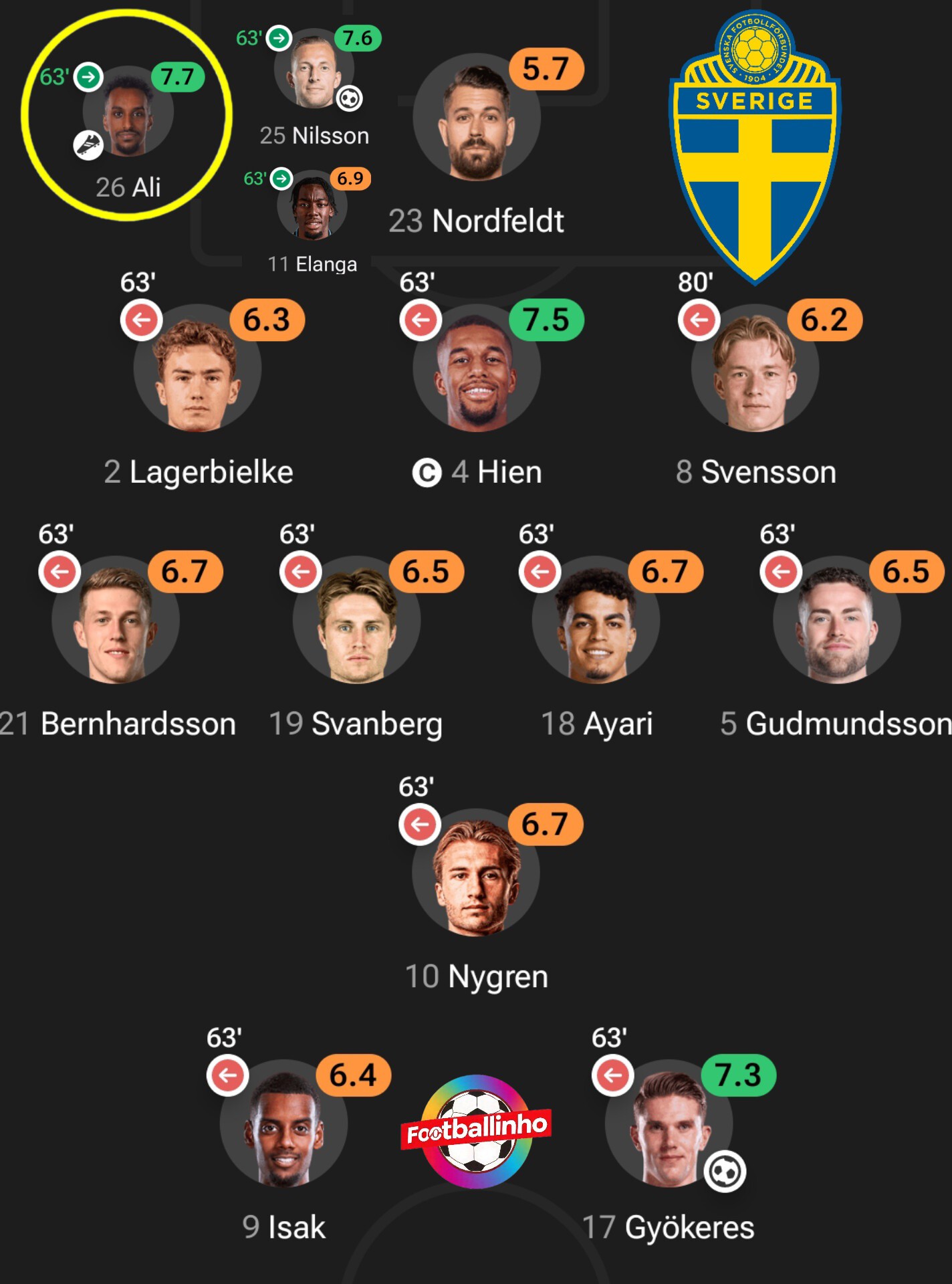
Potter continued to use the fixture as a laboratory for his new-look Sweden. His preferred 5-3-2 has been designed to tighten a defence that had already conceded heavily in recent matches, and the line-up again reflected that approach, with Kristoffer Nordfeldt in goal, a back three of Gustaf Lagerbielke, Isak Hien and Victor Lindelöf, and wing support from Hugo Johansson and Ludvig Bergvall. In midfield, Mattias Svanberg, Jens Karlström and David Svensson were asked to provide the balance between compactness and circulation.
The attack still revolved around Alexander Isak, Sweden’s most reliable difference-maker, especially with Viktor Gyökeres expected to start on the bench. That hierarchy matters for Potter’s long-term analysis of the squad, because Sweden have struggled to turn possession into clean chances. The Swedes had also been missing Taha Ali and Elliot Stroud through injury, while Gabriel Gudmundsson had been out with a hamstring issue for six weeks, limiting Potter’s options on the left side.
Even with those constraints, Sweden’s performance was not simply a defensive exercise. The hosts had enough control in midfield to push Greece back at intervals, and their best moments came when the ball was delivered early into Isak’s path. But just as in the 3-1 defeat to Norway, the same issues reappeared: moments of concentration lapses, gaps around the box, and an inability to shut the game down once the opponents found a foothold.
Greece End the Drought
For Greece, the draw was valuable because it interrupted a run that had been defined by scarcity. Jovanovic’s side had gone three games without a goal, including a 1-0 loss to Paraguay and a 0-0 draw with Hungary, and they came into Stockholm under pressure to show more incision. FIFA ranked 47th at the time of the match, Greece have been searching for a reset since missing out on World Cup qualification, and the friendly provided a useful snapshot of progress rather than a perfect solution.
What stood out was the balance between restraint and ambition. Greece had generally been solid enough to stay in matches — narrow margins have been a theme in their recent fixtures — but their attack had looked blunt far too often. In Stockholm, however, they managed to create enough of a threat to punish Sweden when the defensive structure stretched. That mattered because the pre-match preview had pointed to a team struggling badly for goals, and the 2-2 finish suggested the issue is not purely about personnel but also about timing and confidence in the final third.
Greece’s ability to respond twice is a positive for Jovanovic, particularly after a period in which the side had been accused of overcompensating defensively. While they still looked like a team in transition, they at least left Stockholm with evidence that the attack can function when the tempo rises and Sweden’s back line is forced to defend forward.
Goals Shape the Game
The match became much more open after the early exchanges, with Sweden and Greece both finding space in transition. The hosts’ attack, led by Isak, forced Greece to drop deeper at times, but once the visitors advanced their midfield line the game became stretched. That shift is the main reason the final scoreline surprised those who had expected a tighter contest after recent form suggested otherwise.
Sweden’s wider context matters here. Potter had taken over from Jon Dahl Tomasson and immediately started reshaping the side’s defensive identity. The underlying numbers had already shown a team without a clean sheet in several games and a back line conceding too many simple chances. Greece, meanwhile, had been failing to convert pressure into goals, which is why a 2-2 scoreline was such a notable swing from their prior pattern. The friendly turned into a game where neither side could fully impose its preferred style for long enough.
- Sweden entered after a 3-1 friendly loss to Norway.
- Greece arrived after a 1-0 loss to Paraguay and a 0-0 draw with Hungary.
- Alexander Isak remained Sweden’s key attacking reference point.
- Ivan Jovanovic got goals from a team that had scored none in its previous three outings.
The most encouraging takeaway from the Sweden vs Greece friendly is that both teams generated enough chances to justify the scoreline. The most worrying takeaway is that each still displayed the same vulnerabilities that defined their recent form: Sweden’s defensive instability and Greece’s uneven finishing.
What the Draw Means
For Sweden, the 2-2 draw adds nuance to Potter’s ongoing rebuild. The five-man back line is clearly meant to protect the team against the sort of transitions that hurt them in the Norway defeat, but the system still depends on the wing-backs and midfielders maintaining discipline for long periods. When that slipped, Greece were able to punish them. The match therefore fits into a broader analysis of Sweden’s current phase: better structure than before, but not yet the control Potter wants.
For Greece, the result should be viewed as a step forward, even if the performance was still imperfect. The team had been short of goals and confidence, so a four-goal draw against a European opponent away from home offers more optimism than their recent scorelines. Jovanovic will likely welcome the attacking response, but he will also know that the team needs more consistency if it is to turn friendlies into real momentum.
In a summer window dominated by experimentation, this Sweden vs Greece recap offered a useful snapshot of where both sides stand. Sweden remain a work in progress under Potter, with Isak still carrying too much of the attacking burden, while Greece showed enough resilience to suggest their dry spell may be easing. For readers following similar international warm-up games, ScorePoint AI’s AI predictions and AI assistant can help break down trends, lineups and tactical patterns before the next round of friendlies.
Related reading on ScorePoint AI includes the wild Panama 4-2 Dominican Republic: Six-Goal Friendly Thriller, the compact Congo DR 0-0 Denmark Friendly Recap: Chances Spurned, and the tactical Sweden vs Greece Friendly Preview: Lineups and Prediction.