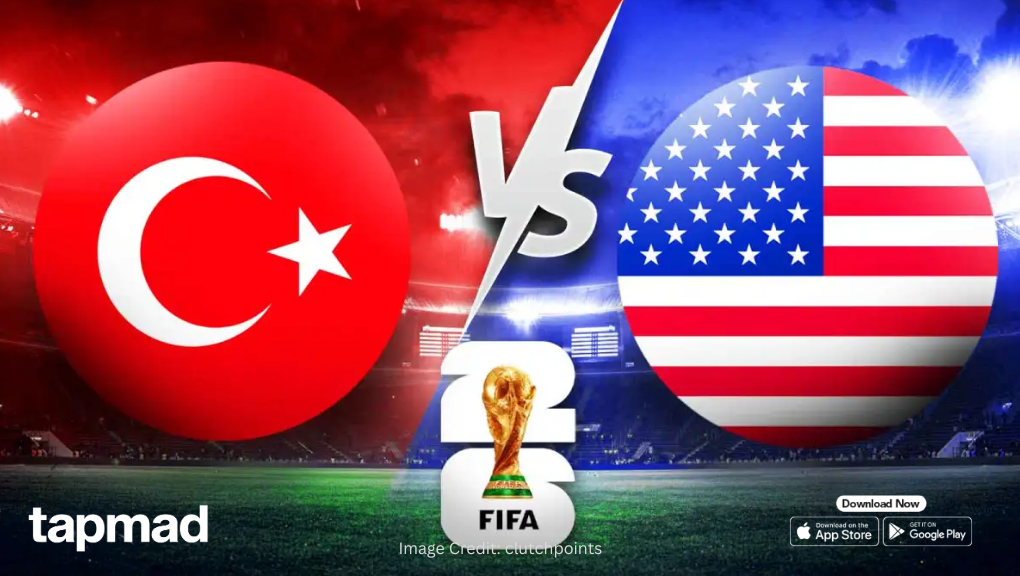
Türkiye vs United States World Cup Group Stage Preview
Türkiye and the United States meet in a tight World Cup group-stage clash, with possession recovery, wide chances and set pieces set to decide control.
Türkiye and the United States arrive at their World Cup group-stage meeting from very different psychological positions, but the same tactical question: who wins the midfield battle and controls game state? The United States have already won the group and can rotate, while Türkiye still need a response after a strange start that has left them with the tournament’s highest shot volume through two matches and no goals to show for it.
Türkiye vs United States preview
The matchup is unusually clear for a game involving two teams with strong athletic profiles. The United States can treat this as a management exercise, especially with Antonee Robinson, Folarin Balogun, Tyler Adams and Chris Richards all on yellow cards. Türkiye, by contrast, need urgency from the opening phase because pride and momentum are the only incentives left in their group finish. That split matters for any model reading: one side may suppress risk, the other must push tempo.
For ScorePoint AI’s analysis lens, the key is not just who has the ball, but who can win it back in useful zones and turn that into attacks down the flanks. That is where this preview gets interesting, because Türkiye’s shot volume has not translated into goals, while the United States have looked more efficient in the games that actually carried competitive pressure.
Midfield control and recovery
The midfield contest should decide who gets to dictate rhythm. The United States’ recent matches against Paraguay and Australia showed a side capable of matching intensity and staying compact between the lines. If the rotated lineup keeps that shape, their biggest edge may be possession recovery after the first pass is broken. That matters against a Türkiye side likely to commit numbers forward in search of the tournament’s first goal.
Türkiye’s problem is less about willingness than conversion. They have already taken more shots than any other team in the World Cup through two matches, yet they have not scored. That profile usually points to one of two things: poor shot quality or a failure to sustain attacks after regains. If the midfield cannot recycle second balls and re-enter the box quickly, the shot count can stay high while the actual threat remains flat.
- United States: likely to prioritize structure and freshness over domination of possession.
- Türkiye: likely to press higher and force transitions, because they need a result more than control.
- Game-state edge: whichever team handles turnovers in midfield best should spend more time in the dangerous phase of the match.
Wide areas and chance creation
Chance creation from wide areas should be a major separator. The United States have looked strongest when they can attack with pace and width, while Türkiye’s route to a breakthrough is likely to come from stretching the field and forcing crossed deliveries into the box. If the Americans rotate heavily, their spacing out wide could become less coordinated, which opens a lane for Türkiye to pin full-backs back and create repeat entries.
That is the practical model question: can Türkiye turn territorial pressure into clean entries from the wings, or do the United States break that pressure by recovering the ball and attacking into space? In a competitive game like this, wide chance creation is often a better indicator of control than raw possession. A team can have 55% of the ball and still lose the game-state battle if it never creates from the flank channels.
Türkiye’s volume across two matches suggests they are getting shots, but the preview data does not show whether those attempts are coming from high-value areas. The United States, meanwhile, have shown enough coherence to suggest they can live with less of the ball if their wide rotations and counter-attacks stay sharp.
Set-piece threat matters
Set pieces could be the cleanest route to a goal in a game that may otherwise be compressed. Türkiye’s desperation gives them an obvious incentive to load dead-ball situations with their best aerial players, while the United States must stay disciplined if they rotate defenders and midfielders. A single corner or free kick can rewrite the entire shape of the match, especially if the Americans are protecting key starters ahead of the Round of 32.
This is where the preview becomes less about style and more about probability. If open-play creation stays balanced, the side with the stronger set-piece package gains the better path to control. Türkiye’s need for a response makes dead balls especially important, and any model weighting should not ignore how a stale possession game can be broken by one delivery into the six-yard box.
Match outlook
The most likely script is a compact, competitive first hour with Türkiye pushing the game forward and the United States trying to absorb pressure without exposing their rotation. If the Americans recover possession efficiently and keep Türkiye from building sustained attacks through the wings, they can neutralize the emotional edge. If Türkiye win enough second balls and turn wide attacks into corners, they have the better chance to force the game into a messy, high-variance finish.
The practical outlook is straightforward: Türkiye vs United States should be decided by midfield recoveries, not just possession totals. The side that creates more from wide areas and turns set pieces into genuine danger is the one more likely to control the game state. That is the central analysis angle, and it is why this preview points to a tight, model-friendly matchup rather than a runaway result.
Research references
These sources were checked while preparing this ScorePoint AI analysis.