Elversberg 3-2 Leverkusen: Bundesliga Match Recap
Elversberg stunned Leverkusen 3-2 on Bundesliga debut. Here is what the early goals, xG split and tactical risks mean for future AI predictions.
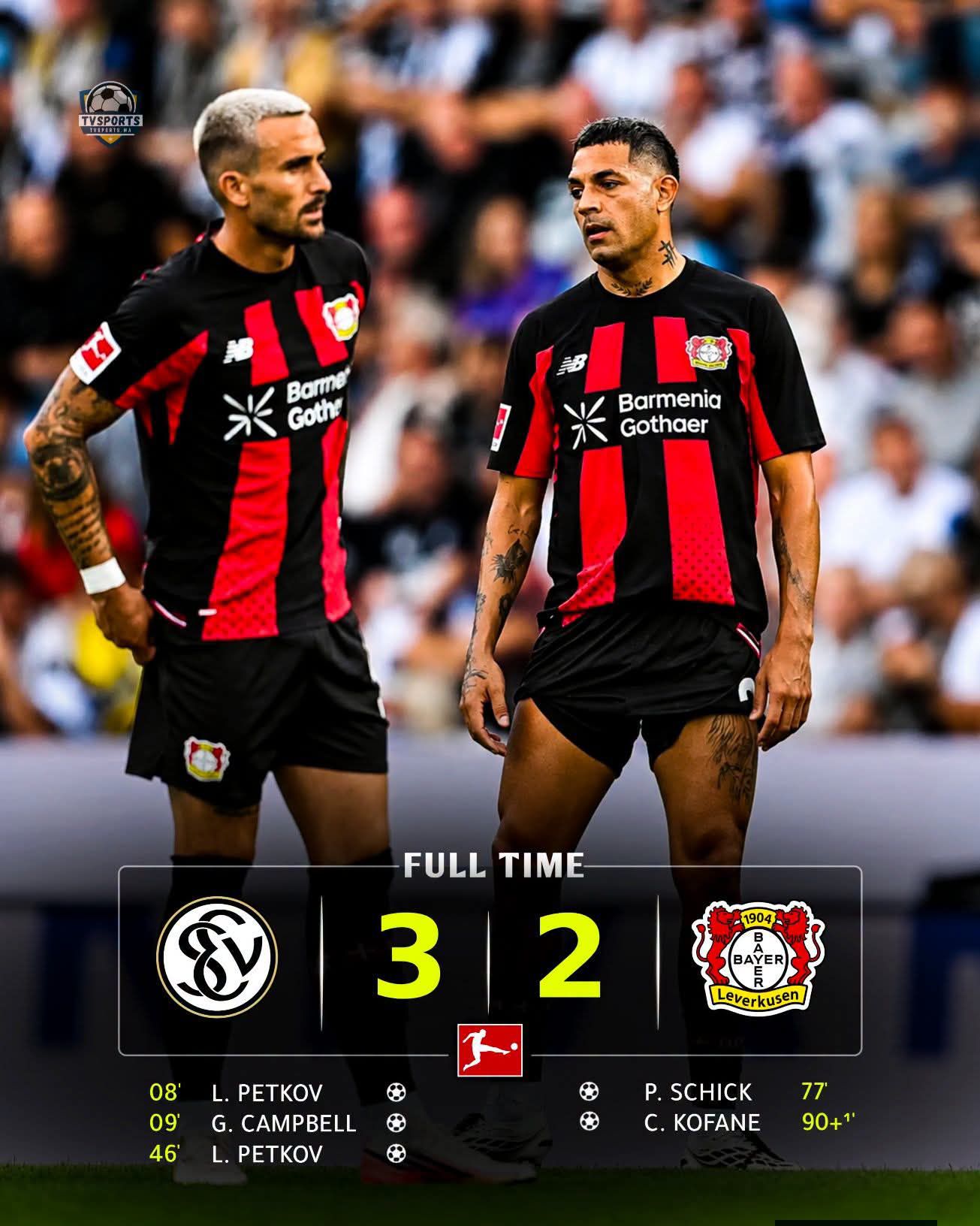
Elversberg defeated Bayer 04 Leverkusen 3-2 in one of the most striking Bundesliga opening-day results in recent seasons, turning a dream debut into a tactical warning for Carles Martínez’s new-look side. The newly promoted hosts scored twice inside nine minutes, restored their three-goal advantage just after half-time and survived a late Leverkusen push.
The result was dramatic, but the underlying numbers were less one-sided than the scoreline. Leverkusen finished with 1.98 expected goals (xG) to Elversberg’s 1.12, yet the visitors’ defensive errors created the match’s decisive game states. That gap between chance quality and final result is central to this Bundesliga match recap—and to how future prediction models should interpret it.
Elversberg’s Fast Bundesliga Start
Elversberg played their first-ever Bundesliga match after completing three promotions in five seasons. Vincent Wagner’s team showed no sign of being overwhelmed by the occasion. Instead, Cole Campbell and Lukas Petkov punished Leverkusen’s uncertainty before the visitors had established possession control.
Petkov opened the scoring after Francis Onyeka, on loan from Leverkusen, held up the ball and released him toward the edge of the area. Petkov’s left-footed drive caught Mark Flekken flat-footed. Moments later, Edmond Tapsoba was dispossessed in a dangerous area, allowing Campbell to carry the ball forward and fire into the bottom-left corner.
That 2-0 lead inside nine minutes was historically significant: no Bundesliga debutant had scored its first two goals in fewer minutes. It also exposed a clear tactical risk. Leverkusen’s build-up structure left little margin for error when their centre-backs were pressed, and Elversberg attacked immediately after winning possession.
Leverkusen’s Defensive Risk
Leverkusen had begun the new era with a 4-0 DFB-Pokal win over Wehen Wiesbaden, with Patrik Schick, Lucas Vázquez, Nathan Tella and Christian Kofane all scoring. The contrast at Elversberg was stark. The visitors had more attacking territory and eventually produced enough opportunities to reach 1.98 xG, but their defensive start placed them in recovery mode almost immediately.
Tapsoba accepted responsibility afterward, describing it as “one of those bad days” in his first Bundesliga match as captain. His comments matched the match pattern: Leverkusen started badly in both halves. In the 47th minute, Petkov again found space on the right and delivered for David Mokwa, who bundled the ball in at the near post.
Leverkusen did create credible responses. Aleix Garcia’s deflected free-kick struck the crossbar early, while Schick headed two chances wide before finally reducing the deficit in the 77th minute with a clever backheel finish from Ibrahim Maza’s diverted shot. Kofane then scored in the 91st minute after Victor Boniface’s effort hit the woodwork, but Elversberg held on.
What Models Should Reassess
A pre-match model would naturally have weighted Leverkusen’s top-flight experience, recent cup result and established attacking talent heavily. Elversberg’s promotion made them a difficult team to benchmark, particularly with limited Bundesliga data. That does not make the upset purely random; it highlights which inputs require more weight in future predictions.
- Early defensive volatility: conceding twice in nine minutes changed the win probability before Leverkusen’s superior chance creation could matter.
- Transition exposure: Elversberg’s first two goals came from turnovers or quick attacks, not sustained possession dominance.
- Game-state effects: the hosts could defend deeper after leading 3-0, while Leverkusen were forced into higher-risk attacking positions.
- Finishing variance: Leverkusen’s 1.98 xG and two goals suggest the attack was functional, even though the defensive failures proved more important.
For ScorePoint AI readers, the useful lesson is not to overcorrect after one shock result. A prediction system should downgrade Leverkusen’s defensive reliability until Martínez’s side shows cleaner build-up under pressure, while also testing whether Elversberg can reproduce this intensity against an opponent that does not gift early turnovers.
Next Fixtures, Next Signals
Leverkusen’s next Bundesliga match is at home against Union Berlin. That fixture should provide a clearer test of whether Elversberg exposed a structural problem or simply captured an unusually chaotic opening. The key indicators are straightforward: turnovers by Tapsoba and the wider back line, the number of attacks allowed immediately after possession losses, and whether Schick continues to convert chances created by Maza, Boniface and Garcia.
Elversberg’s next matches will show whether Petkov, Campbell and Mokwa can maintain the directness that produced three goals. Their 1.12 xG suggests the 3-2 scoreline included a substantial finishing and game-state swing, so future analysis should separate repeatable pressing pressure from one-off defensive mistakes.
This Bundesliga match recap leaves both teams with actionable data. Elversberg earned three points through aggressive transitions and concentration at key moments; Leverkusen lost because tactical ambition was not matched by early defensive security. That distinction matters more for the next AI prediction than the upset headline alone.
Research references
These sources were checked while preparing this ScorePoint AI analysis.