Mexico 1-1 Peru: Friendly International Recap and Analysis
Mexico and Peru shared a 1-1 friendly draw after Jairo Vélez scored and Víctor Guzmán replied. What the result says—and what it cannot tell—about future predictions.
Mexico and Peru drew 1-1 in their Friendly International, with Jairo Vélez putting Peru ahead and Víctor Guzmán equalizing early in the second half. The sequence gives the result its clearest reading: Peru made the first breakthrough, but Mexico answered after the interval. Beyond those events, publicly available match details are limited, so the scoreline—not unverified claims about possession, shots or formations—should anchor this recap.
Mexico vs Peru: The Goal Sequence
Vélez was Peru’s scorer, giving his side the lead. Guzmán then brought Mexico level early in the second half. That timing matters for interpreting the 1-1: Mexico did not have to wait until the closing stages to respond, while Peru’s advantage did not survive the opening portion after the break.
The available information does not establish how either goal was created, whether substitutions changed the game, or which players started. Nor does it identify the managers. Those details would be necessary to make a confident claim about tactical adjustments or individual roles beyond Vélez and Guzmán being the goalscorers. The reliable recap is therefore concise: Peru led, Mexico equalized, and neither side found a reported second goal.
What the 1-1 Says—and Doesn’t
A draw after a lead and an early second-half equalizer is consistent with a match in which both teams had a meaningful scoring moment. It does not, by itself, show that Mexico dominated after the restart, that Peru defended deep, or that either side created the better chances. Without shot totals, expected goals, possession figures or a confirmed lineup, those conclusions would go beyond the evidence.
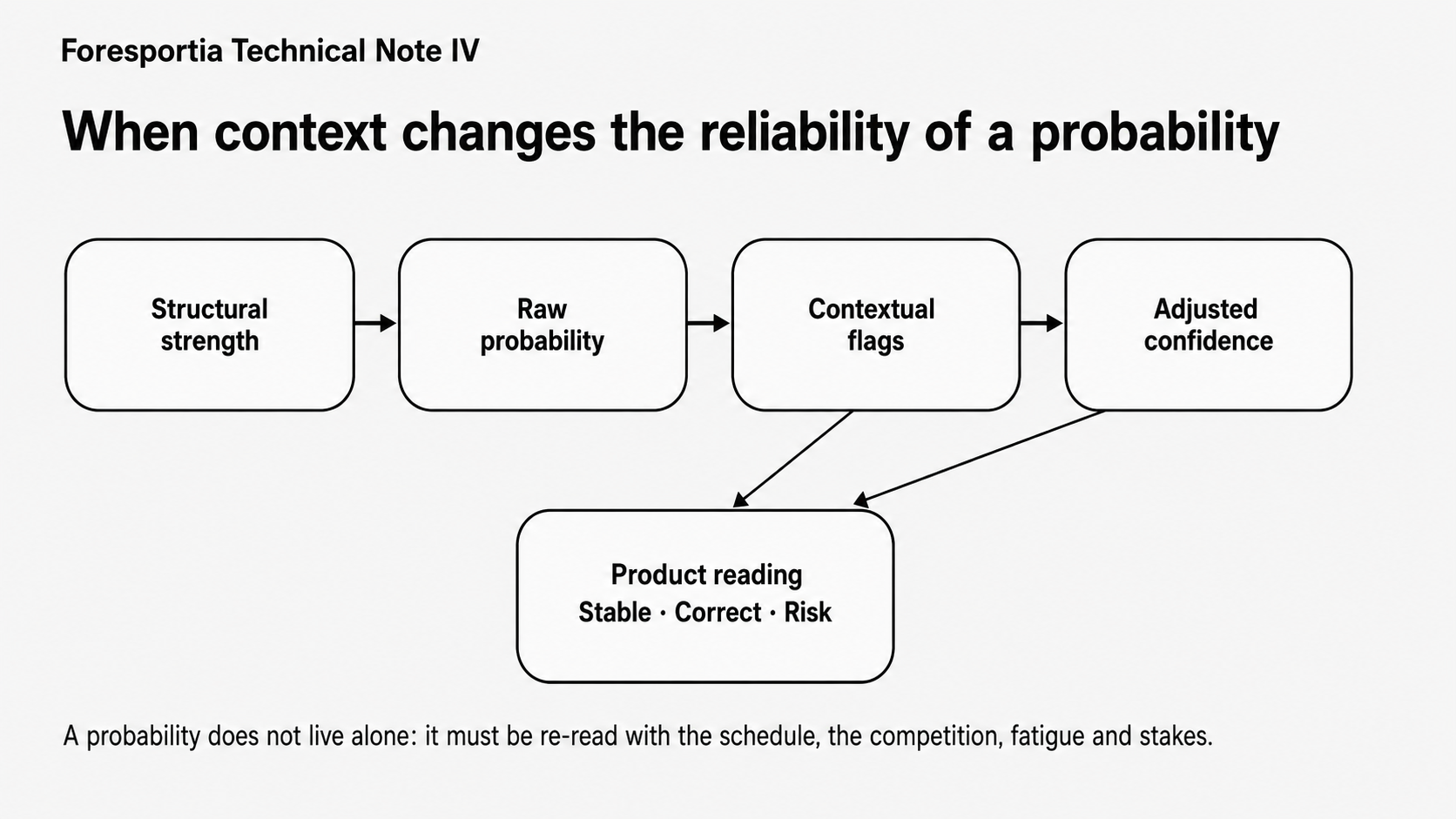
That distinction is important for readers using pre-match model signals. A prediction is built from information available before kickoff; the final score is one outcome, not a full explanation of performance. The 1-1 should prompt a model review of how it rated each team’s scoring likelihood and the chance of a draw, rather than an assumption that one goal sequence proves a broader trend. Public pre-match data for this specific fixture is limited here, so no numerical model probability or forecast accuracy can be responsibly claimed.
Friendly Context and Model Risk
International friendlies can carry added uncertainty when squad selection, minutes and match priorities are not documented. That is a modeling consideration, not evidence that either Mexico or Peru rotated in this match. With no confirmed team sheets or substitution record in the available details, lineup volatility should be treated as an unresolved input—not used to explain the result after the fact.
There is also a historical data trap: a separate ESPN listing records a Mexico-Peru 1-1 friendly on June 3, 2015. The same score in a past meeting does not establish that this recap concerns that fixture, nor does it supply statistics for the match described here. Keeping records distinct matters when models use head-to-head history; mixing two games would distort any comparison.
For a broader guide to uncertainty in this competition type, see how to assess international friendly predictions and lineup risk.
What to Watch Next
The practical takeaway from this Mexico 1-1 Peru recap is to wait for better evidence before changing a view of either side. In the next available match data, readers should look first for confirmed lineups, minutes played, chance quality and whether goals came from repeatable attacking patterns. Those details can separate a genuine shift in team strength from a single friendly result.
For future AI predictions and free picks, the useful signal is not simply “Mexico recovered” or “Peru lost a lead.” It is whether later performances support those readings with measurable chance creation and defensive control. On the facts available, this draw records one goal for each side—Vélez for Peru, Guzmán for Mexico—and leaves the tactical explanation open.
Research references
These sources were checked while preparing this ScorePoint AI analysis.