Arsenal and PSG Fallout: Champions League Transfer Winners
Arsenal and PSG’s Champions League final fallout has reshaped the summer market, with €345 million in planned spending and major transfer ripple effects.
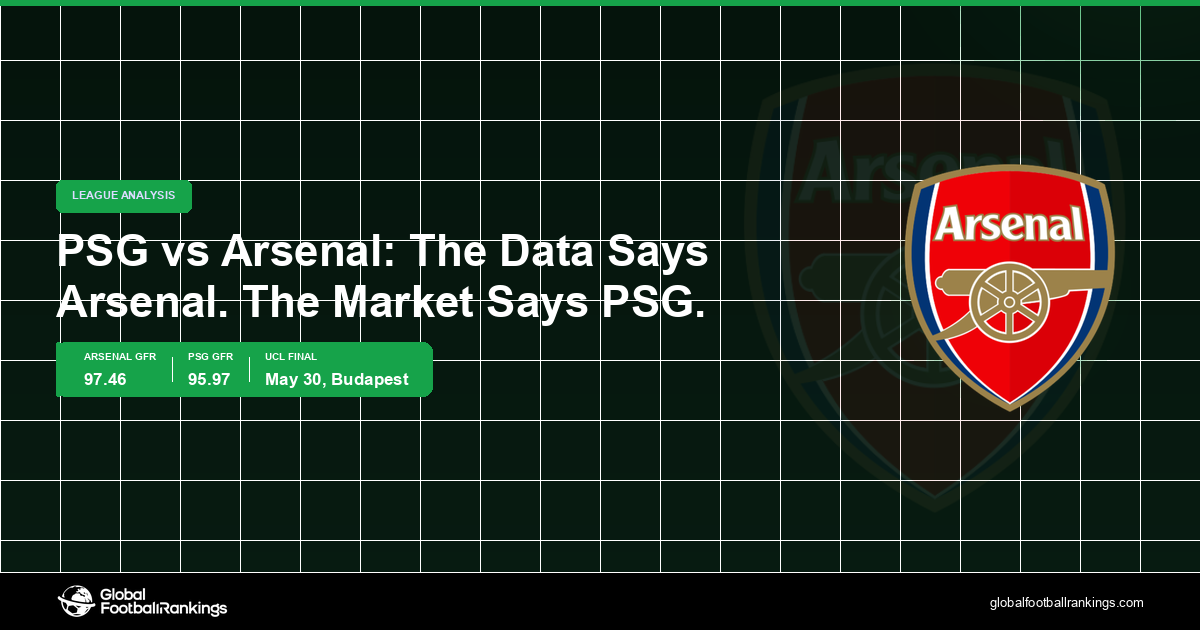
Arsenal and Paris Saint-Germain left Budapest with far more than a trophy race decided on penalties. PSG’s 4-3 shootout win after a 1-1 draw in the 2025/26 Champions League final not only secured back-to-back European crowns, it also triggered an immediate transfer reaction in North London, where Arsenal are now preparing a summer outlay that could reach €345 million. For a club that also won the Premier League on 85 points, the final became less an ending than a reset point — and the transfer winners and losers will shape both sides for years.
The fallout matters because these two clubs are not operating on the same financial or squad-development timeline. Arsenal entered the final as Premier League champions for the first time since 2004, yet still came away chasing the sort of upgrades that usually follow a near-miss: a second striker, a left winger, a number six, an eight, and a right back. PSG, meanwhile, are now trying to turn a title defense into a dynasty, backed by a squad that was already among Europe’s most expensive and a coach in Luis Enrique whose contract is expected to run until 2030.
Arsenal’s costly response
The clearest transfer winner from the final may actually be Arsenal’s recruitment department, because the defeat has accelerated decisions that were already in motion. The club has reportedly earmarked €200 million for two early additions: Morgan Rogers from Aston Villa and Eli Kroupi from Bournemouth. On top of that, the board is prepared to approve another €145 million for defensive and midfield reinforcements, provided Arsenal generate about €115 million through player sales.
That scale of spending tells its own story. Arsenal were strong enough to reach a second Champions League final in their history — the first since the 2006 loss to Barcelona — but not deep enough to close the final gap against PSG. Mikel Arteta’s side had the best domestic campaign in two decades, yet the defeat reinforced the same tactical problem that has shadowed their European run: a team capable of controlling matches, but still short of elite margin-of-error talent in the final third.
In transfer terms, that creates a huge opportunity for the right buys and an equally large risk if the wrong positions are prioritised. A right back, a number six and a second forward are sensible targets, but Arsenal’s biggest post-final lesson is that one more elite attacking layer could have changed Budapest. That is why the names linked to the summer — Rogers and Kroupi first, then deeper midfield and defensive additions — define the transfer winners and losers conversation so sharply.
For a broader look at how the tactical picture fed into the market reaction, see our PSG vs Arsenal fallout tactical lessons and next steps and the wider summer transfer market shockwaves analysis.
PSG’s dynasty case
PSG are the other obvious winner, but their advantage is more subtle than a simple trophy count. Winning consecutive Champions League titles is rare enough in the modern era that it instantly elevates the club’s sporting argument, especially when paired with a squad that has already been built to dominate possession, press aggressively and generate high-volume attacking pressure. Luis Enrique’s side have now moved from “project” to “benchmark.”
The final itself backed up that status. PSG opened the scoring through Ousmane Dembélé, and in a game that remained tight enough to go all the way to penalties, the French champions still controlled the emotional temperature better than Arsenal. That matters in transfer negotiations as much as on the pitch. Players looking for a club that offers the biggest stages, title security and a coach who will stay the course now have a stronger reason to choose Paris.
Financially, PSG also benefit from the kind of prestige that can make a marginal signing easier to close. Both finalists are valued at more than $5 billion, with Arsenal at $5.43 billion and PSG at $5 billion, but the Champions League win increases PSG’s appeal at the exact moment rival clubs are trying to sell themselves on project, minutes and upside. A club that can say “back-to-back European champions” has a clear recruitment edge.
Key transfer winners
The final created several direct winners in the market, even before a single deal is completed. The first is Morgan Rogers. Arsenal’s willingness to make him one of the centrepieces of a €200 million opening spend says a lot about how seriously they are treating this window. The second is Eli Kroupi, whose projected move from Bournemouth places him inside a squad being retooled for a deeper Champions League run.
Another likely winner is PSG’s recruitment pitch to elite targets. Managers and players who want to play in a system where Luis Enrique’s ideas are already delivering European titles now have a more compelling destination. And because PSG have already shown they can win the competition without compromising the attacking identity that made them dangerous against Bayern Munich, their transfer story becomes self-sustaining: success attracts talent, and talent sustains success.
- Morgan Rogers — elevated by Arsenal’s planned €200 million early spend.
- Eli Kroupi — part of the Gunners’ immediate attacking rebuild.
- Ousmane Dembélé — his final goal and title-winning role strengthen PSG’s status.
- Luis Enrique — expected contract extension to 2030 underlines continuity.
Key transfer losers
The biggest losers are the clubs and players squeezed by the raised standards on both sides. For Arsenal, the final showed that a Premier League-winning squad still needs significant augmentation to become a European champion. That means some current players are effectively under review, especially in positions where Arteta has already identified the need for upgrades: full-back depth, a more robust number six, and added scoring support.
For the wider market, the loser is every club hoping PSG’s success creates uncertainty. Instead, the likely extension for Luis Enrique until 2030 suggests continuity, not disruption. In football finance terms, that’s the nightmare scenario for competitors: a title-winning coach staying put, a strong squad being retained, and a club with enough value and ambition to keep investing at the top end.
Arsenal’s own history adds to the pressure. This was only their second Champions League final, and the first ended in defeat to Barcelona in 2006. Two finals, two losses — even with a Premier League title in hand — is the sort of record that can accelerate spending and change squad planning. It is also why the transfer winners and losers debate will focus so heavily on whether Arsenal buy for immediate impact or continue shaping the squad around Arteta’s long-term structure.
What it means now
The broader lesson from Arsenal and PSG is that Champions League finals do not just crown champions; they redraw transfer priorities. Arsenal’s response is all-in and immediate, with a projected €345 million plan built to close the final gap. PSG’s response is more confident: stay stable, keep Luis Enrique, and use the prestige of another European title to attract the next wave of talent.
That is why this Arsenal and PSG fallout stands out as one of the most consequential post-final transfer stories in recent memory. If you want to track how those moves reshape performance, our AI predictions and AI assistant on ScorePoint AI can help break down squad changes, tactical fit and likely outcomes across the next phase of the season.
For more context on the teams involved, revisit our PSG vs Arsenal fallout tactical lessons and next steps alongside the wider PSG-Arsenal aftershock on the summer transfer market. The Champions League final is over, but the transfer battle it sparked is only beginning.